
As the evenings draw in and temperatures begin to fall, many of us start thinking about how to keep our homes warm and cosy. But if you have an older parent or relative living independently, autumn can bring a few extra things to consider.
Is their home warm enough? Are they managing everyday tasks comfortably? Could darker evenings and wet weather make getting around more difficult?
The good news is that a few simple preparations can make a real difference to their comfort, safety and independence.
We’ve put together eight practical checks to help you and your loved one feel more prepared for the colder months ahead.
1. Keep the Home Warm and Comfortable
Before the colder weather arrives, check that the heating is working properly and that your relative feels confident using the thermostat or heating controls. It’s also worth checking radiators, arranging a boiler service if one is due and making sure frequently used rooms can be kept comfortably warm. For older people, the NHS generally recommends keeping rooms they regularly use at at least 18°C, particularly if they have reduced mobility or an existing health condition. If modern heating controls are difficult to use, consider leaving simple written instructions somewhere easy to see. Autumn is also a good opportunity to test smoke and carbon monoxide alarms, particularly as heating appliances begin to be used more frequently.
2. Check Lighting as the Evenings Get Darker
With fewer daylight hours, good lighting becomes increasingly important, especially for someone who may be unsteady on their feet. Check that hallways, stairs, entrances and frequently used rooms are well lit. Replace any bulbs that have stopped working and consider night lights or motion-activated lighting for areas used during the night. Outside, make sure pathways and entrances are clearly visible, particularly if your relative regularly leaves the house or receives visitors after dark.
A simple tip: Keep a working torch somewhere easy to reach in case of a power cut.
3. Reduce Slips, Trips and Falls
Wet shoes, fallen leaves and darker evenings can introduce additional hazards around the home during autumn.
Take a few minutes to walk around your relative’s home and look out for:
- Loose rugs or mats that could cause trips
- Trailing cables or cluttered walkways
- Slippery entrance areas
- Uneven flooring or steps
- Frequently used belongings that are difficult to reach
Keeping everyday essentials within easy reach can reduce the need to stretch, bend or climb. It’s also worth checking that shoes and slippers fit properly and provide good grip, particularly if your relative has reduced mobility. Small changes around the home can make a big difference to someone’s confidence and independence.
4. Get Ready for Wet and Colder Weather
Autumn weather can be unpredictable, so it’s worth making sure your relative has everything they need to stay comfortable when heading outdoors. Check that warm coats, waterproof clothing and suitable footwear are easily accessible. Outside the home, keep pathways and entrances clear of fallen leaves, moss and other debris that could become slippery when wet. If your relative enjoys spending time outdoors, encourage them to continue where possible, while being mindful of changing weather conditions. Maintaining familiar routines and activities can be just as important as making practical changes around the home.
5. Keep the Kitchen Stocked with Everyday Essentials
Getting to the shops can become more difficult during colder or wetter weather, particularly for someone who doesn’t drive or has reduced mobility. Keeping a selection of everyday essentials and easy-to-prepare meals at home can provide reassurance. Check cupboards, the fridge and freezer to make sure there are foods your relative enjoys and can prepare safely. It’s also a good opportunity to check expiry dates and ensure commonly used kitchen items are within easy reach. Sometimes, preparing meals or getting out to do the weekly shop can become more challenging than it once was.
At Avanti Homecare, our carers can provide a helping hand with shopping, meal preparation and everyday household tasks, helping people maintain their routines and continue enjoying life at home.
6. Stay on Top of Medication and Prescriptions
Keeping medication organised is important throughout the year, but colder weather can make collecting prescriptions more difficult. Check that your relative has enough of their regular medication and understands how and when it should be taken. If they receive repeat prescriptions, make sure arrangements are in place for ordering and collecting them, particularly if getting out of the house becomes more challenging. It may also be helpful to ask their pharmacy about prescription delivery services or other available support. If you’re concerned about how your relative is managing their medication, speak to their pharmacist or GP rather than making changes yourself.
7. Keep Important Contacts and Emergency Information Handy
Having important contact details somewhere visible can provide reassurance for both older people and their families.Consider keeping a simple list near the telephone or in another easily accessible place, including:
- Family members and trusted neighbours
- GP surgery and local pharmacy
- Anyone involved in providing regular care or support
- Emergency contact information
It’s also worth checking that your relative’s telephone is working properly and that they know who to contact if they need assistance.For someone living alone, arranging regular check-ins with family, friends or neighbours can offer additional peace of mind.
8. Don’t Forget About Social Wellbeing
As the days become shorter and the weather less inviting, older people may find themselves spending more time indoors, particularly if they live alone. Fewer opportunities to get out and socialise can sometimes lead to feelings of loneliness or isolation.
Regular contact with family, friends and neighbours can make a real difference. Encourage phone calls, arrange visits or explore local community groups and activities that offer opportunities to meet others. Even something as simple as sharing a cup of tea and enjoying a friendly conversation can brighten someone’s day. It’s also worth taking the time to ask how your relative is feeling and whether there’s anything they’d like a little more help with. After all, feeling connected, valued and supported is just as important as feeling safe and comfortable at home.
Could a Little Extra Support Make All the Difference?
Sometimes, preparing for autumn isn’t just about making changes around the home. It’s also an opportunity to check how your loved one is managing day to day.
Perhaps shopping is becoming more difficult, meals are being skipped or they’re spending more time alone than they’d like.These changes don’t necessarily mean someone needs a lot of care. Sometimes, a little help with everyday tasks, support with personal care or simply having some regular company can make a real difference.
Receiving support shouldn’t mean giving up independence.
As a family-run homecare provider supporting families across Derbyshire, we understand how important it is to find care that feels right for your loved one.
Our compassionate carers take the time to get to know each individual, understanding their routines, preferences and what matters most to them. Whether it’s help around the home, companionship or more regular personal care, our support is tailored to fit around their everyday life.
We’re Here When You Need Us
We understand that knowing when to arrange care for a loved one isn’t always easy. Whether you’re exploring options for the future or feel that some additional support is needed now, our friendly team is here to listen, answer your questions and help you understand what’s available.
Why not arrange a free 30-minute Meet & Greet?
It’s a chance to discuss your loved one’s needs, ask questions and find out how Avanti Homecare could help, with no obligation to proceed.
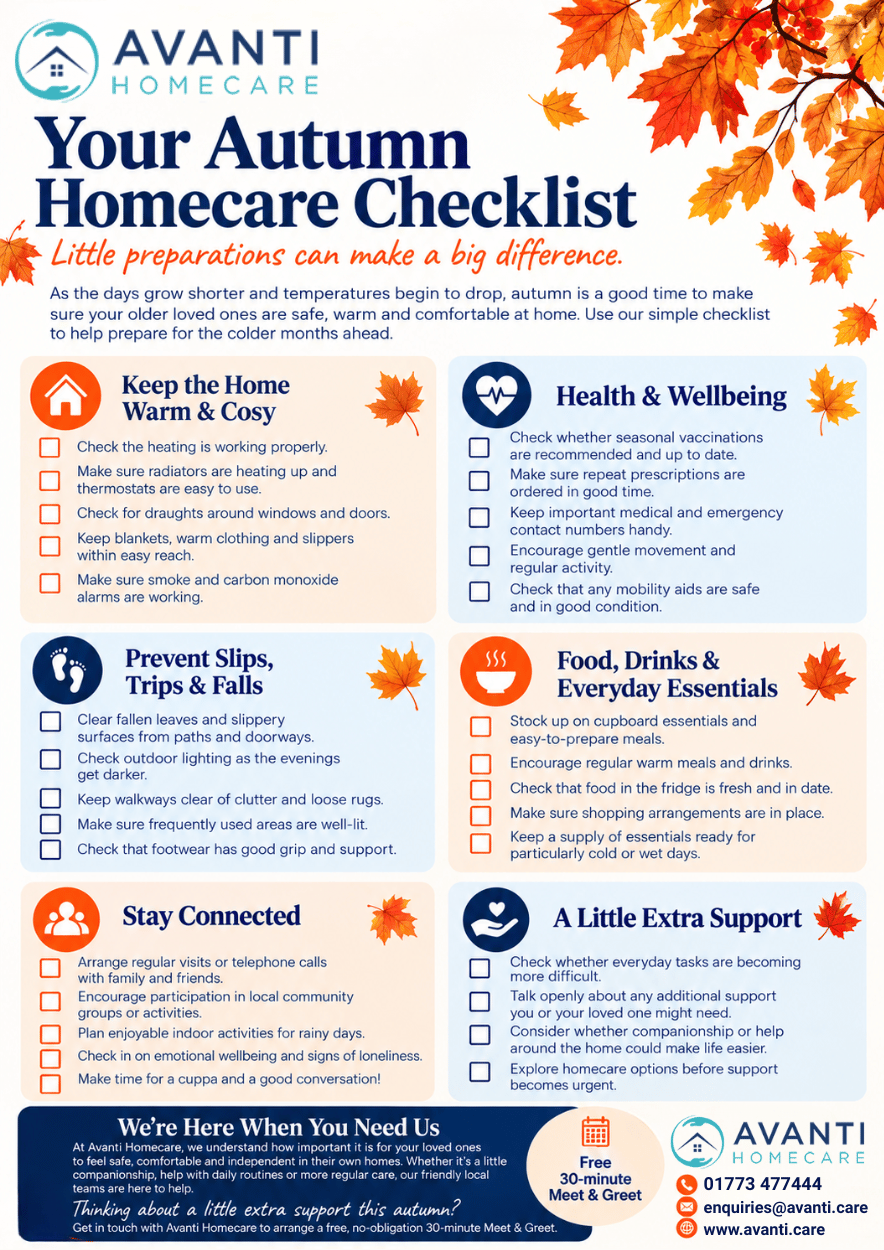
Download our FREE Autumn Homecare Checklist
Feel free to download our FREE Autumn Homecare Checklist, packed with simple, practical tips to help keep your loved ones safe, warm and comfortable at home this autumn.